Bootstrapping your startup means funding it with your own revenue instead of raising capital from investors. In Morocco, many founders assume by default that a “serious” startup has to raise funds. That’s false, and confusing growth with fundraising is costly: unnecessary dilution, heavier governance, and growth pressure that doesn’t match the real market.
Bootstrapping your startup: what does it actually mean?
Bootstrapping means funding the company’s development with the revenue it generates, the founders’ personal savings, or a standard bank loan — without opening the capital to outside investors. Raising funds, by contrast, means trading a share of the capital for cash in order to move faster than self-funding would allow.
Neither approach outranks the other. Raising funds isn’t “more professional”; bootstrapping isn’t automatically “safer.” They answer different constraints: the pace the market demands, how capital-intensive the project is, and how much dilution and investor reporting a founder is willing to accept.
Why so many founders raise funds without asking the question first
Three reflexes explain this bias. First, visibility bias: funding rounds make the news, not the profitable companies quietly growing in the background. Second, the illusion of validation: some founders confuse “an investor said yes” with “the market said yes” — two very different validations, and only the second one pays salaries. Third, calendar pressure: joining a program geared toward fundraising creates an implicit expectation to pitch investors, even when the business model doesn’t need it.
In Morocco, the venture-capital supply remains thinner than in more mature ecosystems. Many founders bootstrap out of necessity before seeking a raise — that’s not a fallback, it’s often the sturdiest path to arrive in a position of strength in front of an investor.
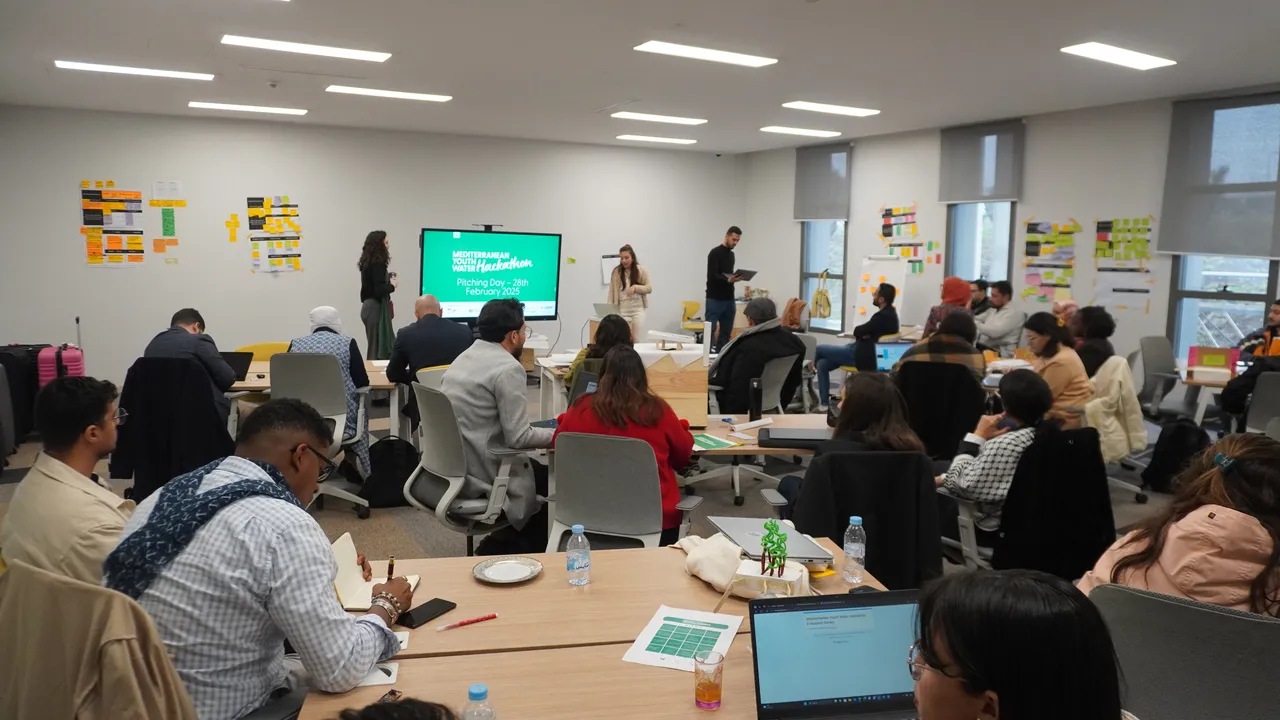
This bias hits students and recent graduates especially hard as they come out of an ideation program or a hackathon: the ecosystem they see (articles, social media, panels) over-exposes fundraising as a mandatory step of the entrepreneurial journey, while the majority of viable companies, in Morocco as elsewhere, never raise outside capital and grow on their own revenue.
The middle path: non-dilutive funding and support
Between pure bootstrapping and raising funds, there’s a third, often overlooked path: non-dilutive funding. Competition prizes, grants from a support program, or simply the in-kind help of an incubation program (mentoring, workspace, networking) buy time without giving up equity. This path doesn’t replace a raise when the project is genuinely capital-intensive, but it usefully delays the moment you have to choose — and gives you more data to choose with better arguments.
This is familiar territory for founders coming out of the academic world: a researcher or student who starts through an incubation program often accesses this kind of support well before the question of a formal raise even comes up.
The signals that bootstrapping holds up
| Criterion | Bootstrapping holds up | Raising funds becomes necessary |
|---|---|---|
| Gross margin | Decent from the first sales (services, SaaS, niche e-commerce) | Negative or very thin before reaching critical mass |
| Sales cycle | Short, fast customer decision | Long, multi-month B2B or institutional cycle |
| Capital intensity | Low: no heavy infrastructure to build before selling | High: R&D, hardware, certifications before the first revenue |
| Pace the market demands | Being “first to market” isn’t decisive | Narrow market window, better-funded competitors |
| Tolerance for dilution | Founders want to keep control and decision-making | Founders accept sharing capital to move faster |
If most boxes lean left, bootstrapping longer is defensible. If several lean right — especially capital intensity and market window — delaying a raise becomes a risky bet, not a cautious choice.
When raising funds becomes hard to avoid
Some projects simply don’t have a choice. A deep-tech project that needs to fund several months of R&D before any sale, a hardware product that requires costly manufacturing tooling, or a market where a better-capitalized competitor can take the space within months: in these cases, waiting to “prove it alone” often means never leaving the prototype stage. Raising funds then finances a risk the market won’t give you time to cover with your own revenue.
Caution: bootstrapping isn’t free. It slows down hiring, limits the marketing budget, and demands strict cash discipline from month one — see managing your cash flow and burn rate. A founder who bootstraps without tracking the numbers every month takes on as much risk as a poorly prepared fundraise.
The limits of bootstrapping (what it doesn’t solve)
Bootstrapping doesn’t fix a business model that doesn’t hold up. If the selling price doesn’t cover the customer acquisition cost, no amount of cash discipline will save the project — that problem has to be solved before deciding how to fund it. Bootstrapping also mechanically slows growth — it’s a choice of pace, not a shortcut to the same outcome as a funded startup. Finally, bootstrapping alone or with a small team limits your ability to respond to a tender or contract that requires financial guarantees only a better-capitalized structure can provide.
The 4-question test before deciding
- Does my product generate revenue before I’ve raised a single dirham? If not, pure bootstrapping is difficult — consider targeted seed funding (see the Morocco startup funding guide).
- Can a better-funded competitor take over my market before I do? If yes, speed matters more than keeping control of the capital.
- Can I hold 12 months on my current cash without raising? If not, this isn’t a strategic choice but a constraint — plan for it, don’t let it catch you off guard.
- Am I willing to share decisions with an investor to move faster? If the answer is no on principle, bootstrapping longer is consistent — but only if the market gives you that time.
Actionable checklist
- Calculate your real gross margin on your last three sales (not a theoretical estimate).
- Assess the opportunity cost: how many months of delay does bootstrapping impose compared to raising?
- Check whether your sector has a narrow market window (funded competitors, network effects, patents being filed elsewhere).
- Set a cash threshold (minimum runway) below which you actively trigger a funding search, instead of waiting until you run dry.
- If you choose to raise, prepare your materials before you need them — see raising funds in Morocco: business angels, VCs and love money.
Conclusion
There’s no universal right answer. Among the startups the EIC has supported, 76 remain active today, on very different funding paths: some bootstrapped for years before seeking an investor, others raised at the prototype stage because their market demanded it. The right choice depends on your margin, your sales cycle, and the window the market gives you — not on a trend to follow.
Next step: run the 4-question test above with your real numbers, then explore EIC programs for support matched to your funding path, bootstrapped or not.