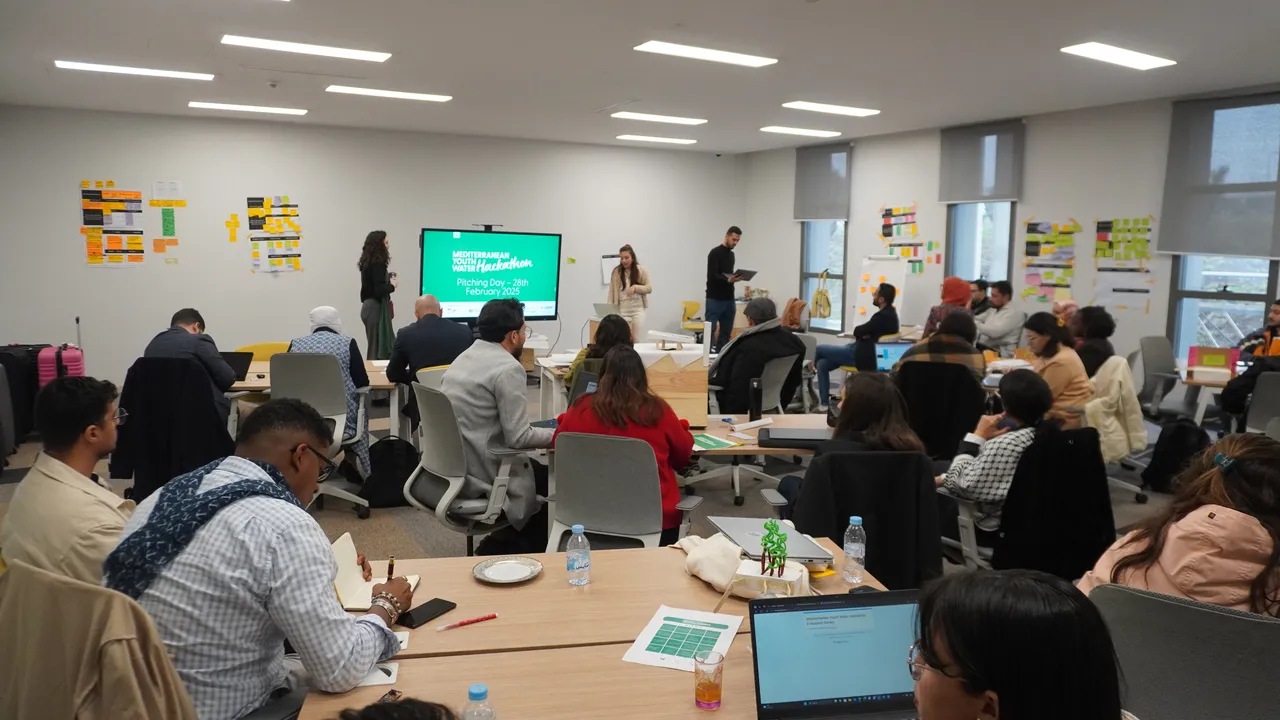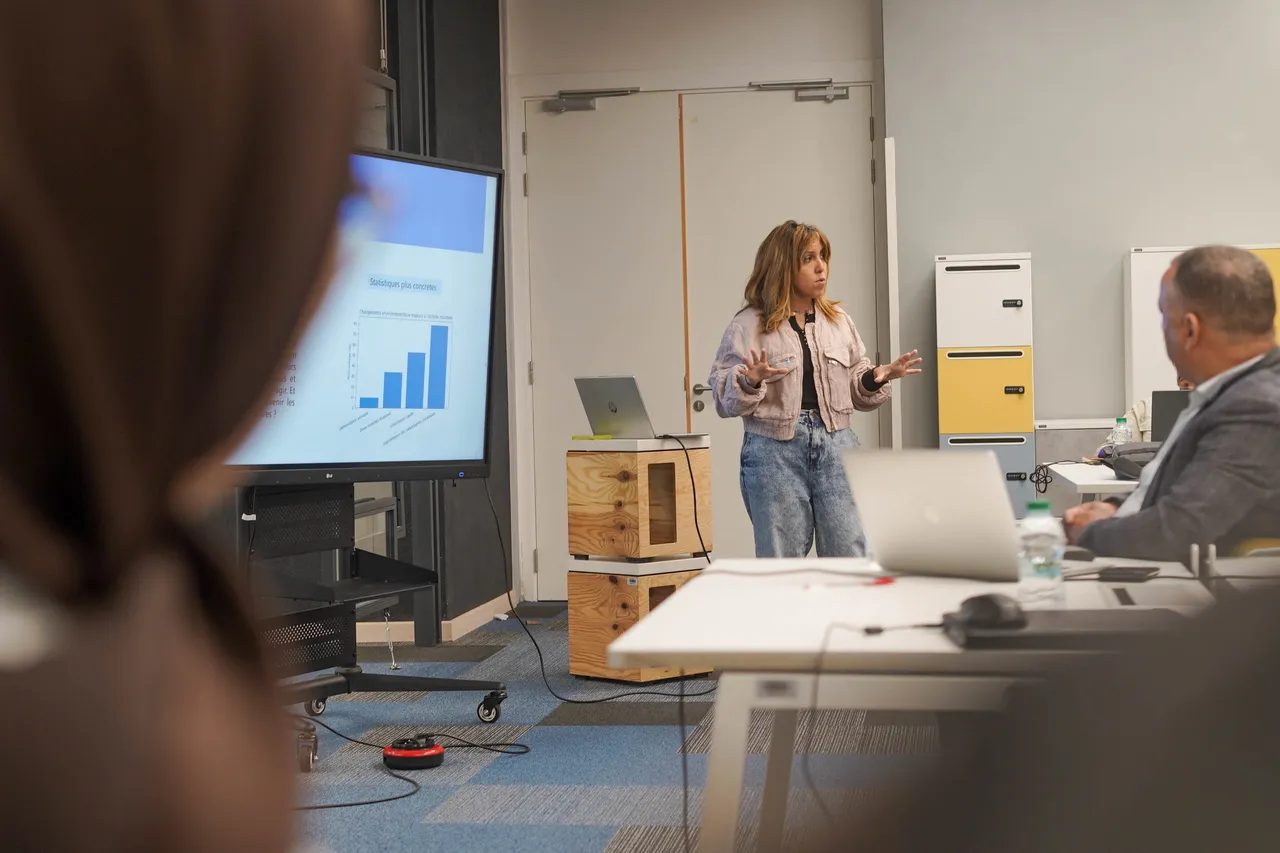
A pitch deck is not a “lecture”. It is a selection weapon. And a jury scans fast: problem, proof, team, ask.
The non-negotiable rules
- The deck illustrates your talk, it does not replace it. If your deck makes sense without you, it is a document, not pitch material.
- Keep it short. A 5-minute pitch means few slides. Every second counts.
- One slide = one idea. If you have to explain a slide, it has failed.
The 10-slide structure
| Slide | Content | Time |
|---|---|---|
| 1. Promise | 1 sentence that sums up your value | 15 sec |
| 2. Problem | A measurable, concrete, everyday pain | 30 sec |
| 3. Solution | How you solve it (simply) | 30 sec |
| 4. Demo/Product | Screenshots, mock-ups | 30 sec |
| 5. Target market | No fanciful TAM — your segment | 20 sec |
| 6. Business model | How you make money | 20 sec |
| 7. Traction | Even early: interviews, pilots, sign-ups | 30 sec |
| 8. Go-to-market | How you reach your customers | 20 sec |
| 9. Team | Why you are the right people | 20 sec |
| 10. Ask | What you are looking for + a precise next step | 15 sec |
The mistakes that get you eliminated
A problem that is too broad = a vague solution
“We solve agriculture’s problems” → eliminated. “We cut post-harvest losses by 30% for citrus cooperatives in Souss-Massa” → interesting.
No numbers (not even small ones)
No numbers = no credibility. Even “5 interviews” or “2 pre-orders” is better than nothing.
Slide 10 “we are looking for help” with no clear ask
“We are looking for support” → vague. “We are looking for 6 months of incubation + access to 3 sector mentors + MAD 50K of pre-seed funding to validate our MVP on 20 farms” → precise.
The jury rule: if, after your pitch, the jury cannot sum up your project in 1 sentence, you have lost.
Storytelling that works
The most effective narrative structure:
- Situation: “Today, cooperatives lose X% of their harvest…”
- Complication: “…because nobody measures the temperature in real time”
- Resolution: “Our sensor + app sends an alert 4 hours before the critical threshold”
- Proof: “Across 3 test cooperatives, losses fell by 28%“
Checklist before sending
- Deck readable on mobile (24pt font minimum)
- 3 documented proofs (interviews, pilots, pre-orders)
- A precise ask (funding, support, pilot)
- No unexplained technical jargon
- PDF version, 3 MB max
- File name:
[StartupName]_PitchDeck_[Date].pdf
Conclusion
A good pitch deck does not convince through design. It convinces through clarity: a real problem, a solution that works, proof, and a precise ask. The rest is decoration.
Next step: run your deck through the checklist above, then apply directly by sending your deck + 2 pages of “field proof”.