The market does not “reward” an invention. It rewards an invention that solves a problem, with realistic adoption (cost, integration, risk). Commercialization is the bridge between the two.
The 3 exit routes
Before rushing in, clarify your strategy:
| Route | Principle | For whom | Risk |
|---|---|---|---|
| Licensing | Grant the rights to exploit a patent | A researcher who does not want to start a company | Dependence on the licensee |
| Spin-off | Create a startup to carry the technology | A researcher-entrepreneur | Full entrepreneurial risk |
| Co-development | Sign a pilot with an industrial partner | A pragmatic researcher | Complex IP negotiation |
Step 1: clarify “who is hurting”
Before IP, clarify the “customer”: who has the problem, how much it costs, what alternative exists. Without that, you will protect a technology… with no market.
The 3-question test
- Who would pay to solve this problem today?
- How much does this problem cost (in time, money, risk)?
- How do they currently cope without your solution?
If you do not have clear answers, you are not ready to commercialize. You are ready to explore.
Step 2: proof of use (not proof of concept)
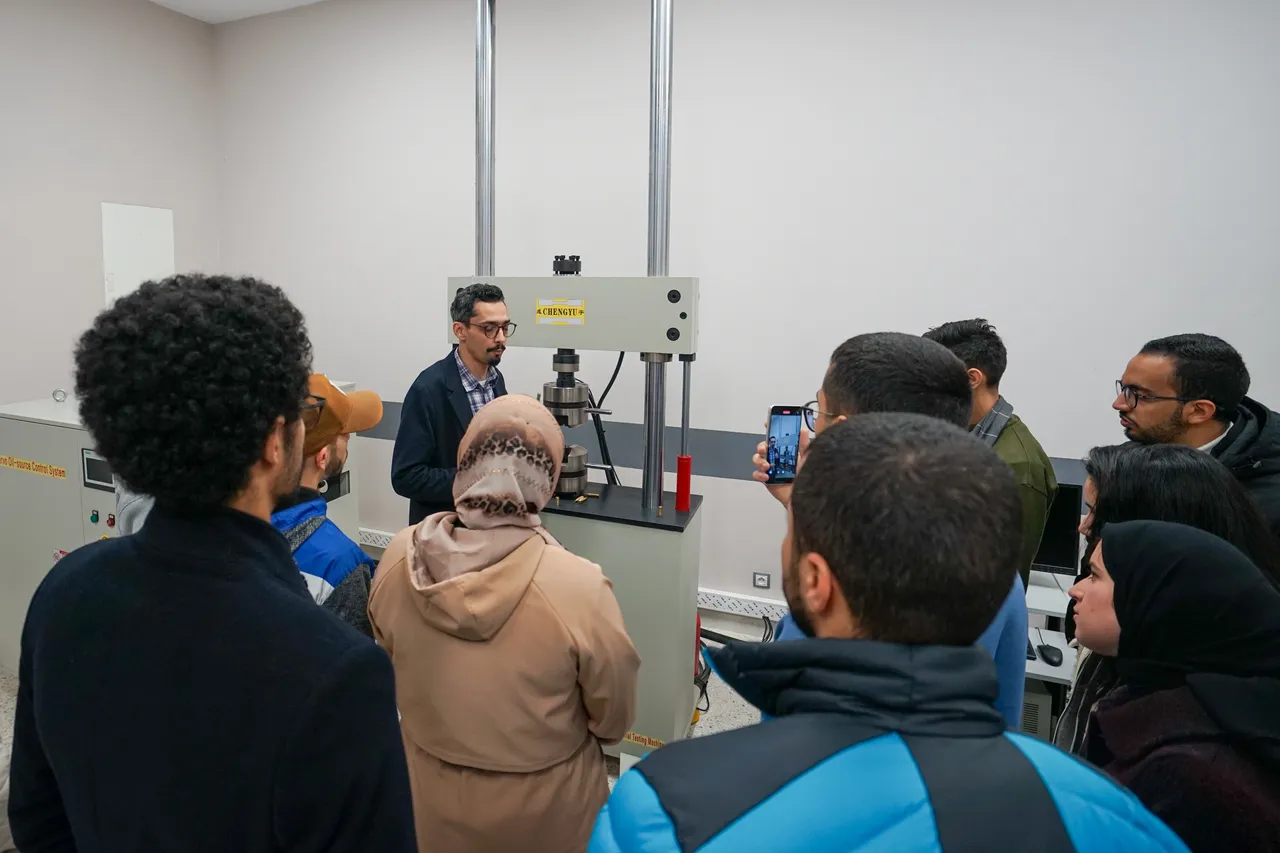
A lab POC ≠ real use. Your next proof must be a test in a context close to the field:
- A realistic environment (not the perfect conditions of the lab)
- Real users (not your colleagues)
- Real constraints (time, budget, the user’s skills)
The critical difference: a POC proves that “it works”. A proof of use proves that “someone uses it and gets value from it”.
Step 3: protect and make it commercially viable
In Morocco, official initiatives make it easier to commercialize patents and connect with partners. OMPIC has launched a bank of innovative projects and an IP Marketplace platform.
What IP Marketplace enables
- Publishing a technology offer (patent, know-how)
- Searching companies’ technology needs
- Facilitating licensing and commercialization
- Accessing innovation challenges
Protect before disclosing
An essential reminder: a scientific publication destroys the novelty required to file a patent. Protect first, publish second.
Step 4: find a “pilot” partner
The hardest part is the first deployment. Look for a partner who has:
- An operational interest — they want to solve the problem, not just “innovate”
- A budget — even a modest one proves commitment
- The capacity to integrate — they can test your solution in their environment
Where to look
- Innovation units of large companies
- University-industry partnership programs
- Sector trade shows (SIAM for agriculture, GITEX for digital)
- Incubation networks and matchmaking platforms
Conclusion
The right goal is not “filing a patent”. It is to:
- Make the innovation adoptable
- Secure a first use case
- Choose licensing or a spin-off with full knowledge of the trade-offs
- Prove the value before seeking funding
Next step: sum up your innovation on a single page (problem → solution → proof), then contact the EIC to be connected with a pilot partner (university ↔ industry).